

 +91 90032 34512
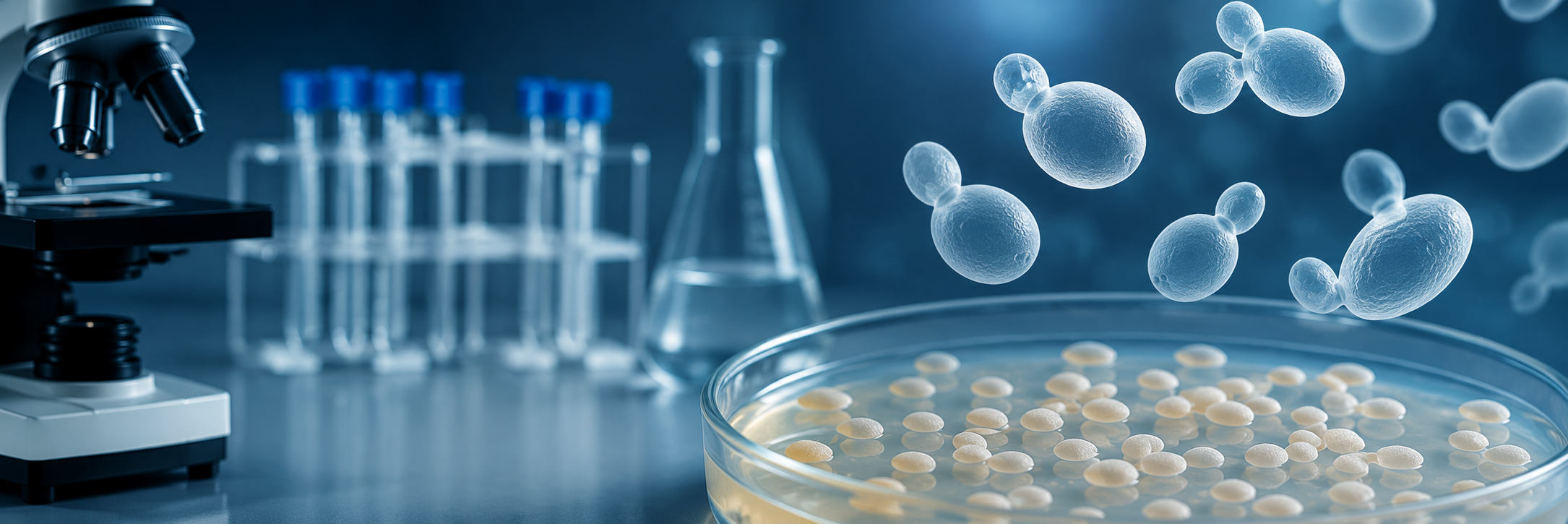
Saccharomyces cerevisiae (yeast) is a powerful eukaryotic model for studying toxicity, drug discovery, aging, metabolism and genetic pathways with high reproducibility, rapid growth and cost-effectiveness.
Why Choose Yeast Model Testing?
Yeast Model Testing provides a reliable and practical laboratory approach for evaluating the biological effects of compounds, plant extracts, and formulations. Yeast models are useful for studying cellular responses under controlled conditions while supporting efficient screening and research
- Reliable Biological Model – Provides a well-established system for studying fundamental cellular processes.
- Controlled Experiments – Allows compounds and extracts to be evaluated under standardized conditions.
- Rapid Results – Yeast grows quickly, enabling efficient laboratory screening.
- Cost-Effective Testing – Requires relatively simple culture and laboratory procedures.
- Drug & Compound Screening – Useful for preliminary evaluation of biological activity and cellular effects.
- Genetic & Molecular Studies – Supports research into gene function, cellular pathways, and metabolism.
Frequently Asked Questions
Yeast is widely used because it grows rapidly, is easy to culture, and has many fundamental cellular and genetic processes that are relevant to broader biological research.
Depending on the study objectives, yeast models can be used to evaluate plant extracts, natural compounds, formulations, chemicals, and other research samples.
Testing can support the preliminary evaluation of biological activity, cellular responses, growth effects, stress responses, and other research-specific endpoints.
Yes. Yeast models can be useful for preliminary screening of plant extracts and natural products to investigate their biological effects under controlled laboratory conditions.